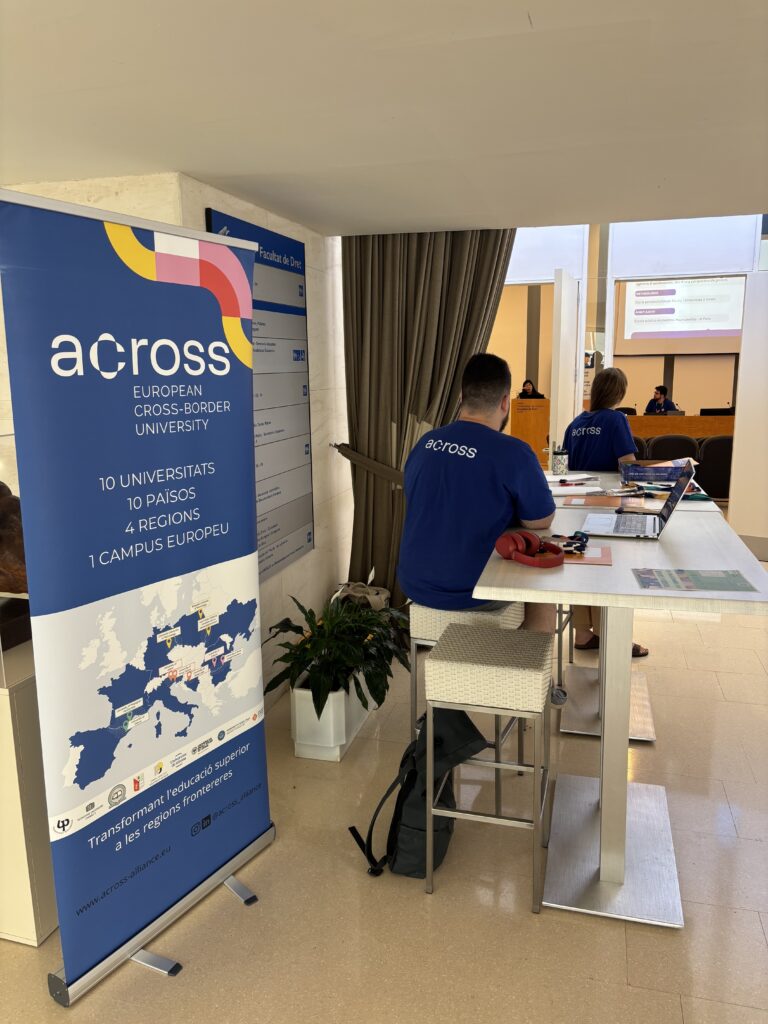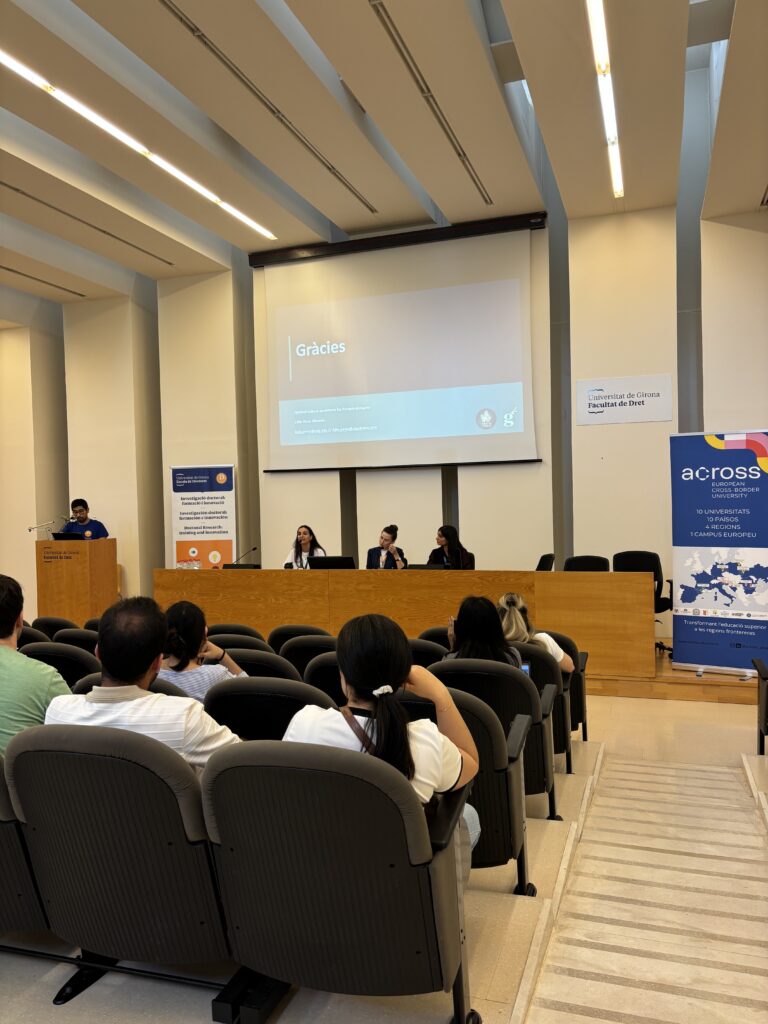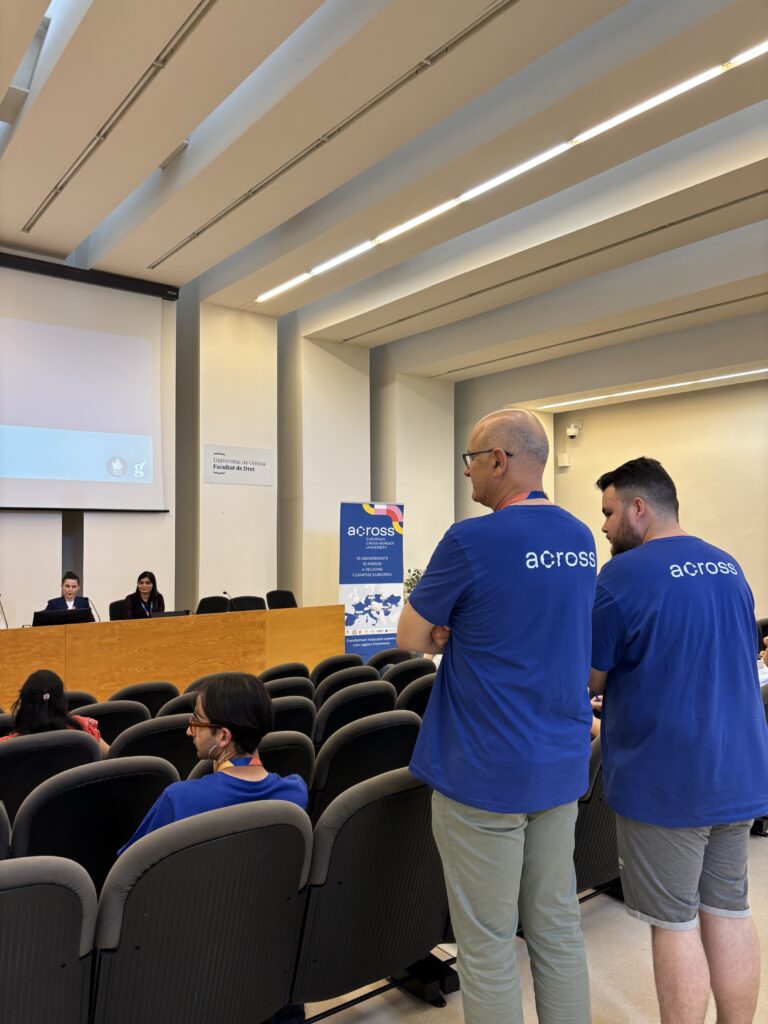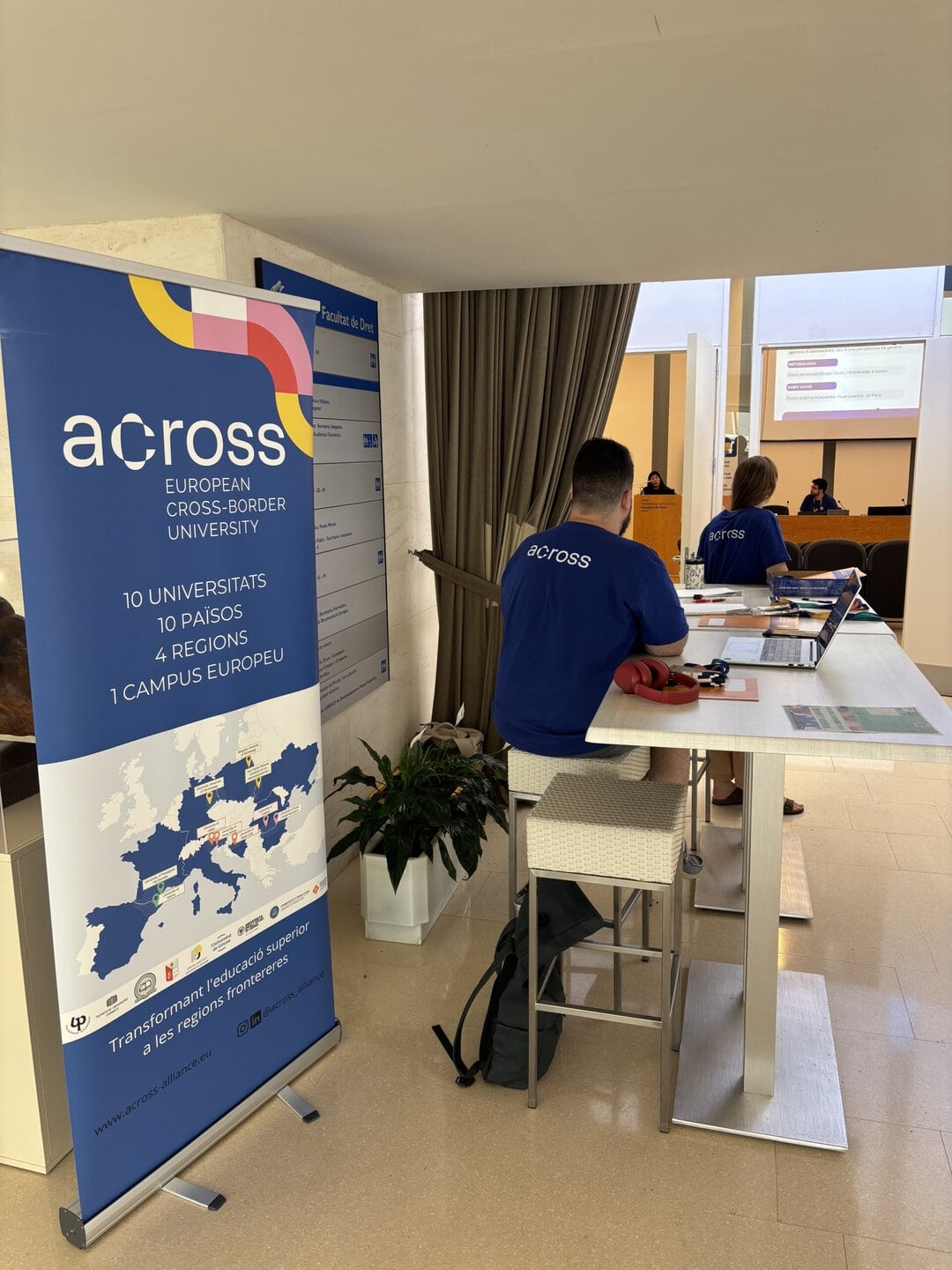
The 10th Predoctoral Researchers Conference of the University of Girona (UdG), held from 1 to 4 June 2026, has consolidated its position as a multidisciplinary forum for scientific exchange, academic discussion and networking among doctoral researchers. Organised by the UdG Doctoral School with the support of the Vice-Rectorate for Research and Knowledge Transfer and the ACROSS university alliance, the conference gathered 81 contributions from doctoral candidates.
One of the most significant aspects of this year’s edition was the participation of doctoral researchers from other ACROSS member universities, adding a strong international dimension to the event. In total, fifteen of the contributions came from the University of Udine, the University of Białystok, the Chemnitz University of Technology and the University of Nova Gorica, strengthening collaboration among alliance partners and fostering mobility and interaction between early-career researchers across Europe.
The main objective of the conference is to provide master’s and doctoral students with an opportunity to present preliminary research findings, develop scientific communication skills and encourage interdisciplinary dialogue. Contributions were organised around the United Nations Sustainable Development Goals (SDGs), addressing topics such as health, environmental sustainability, reducing inequalities, social justice, inclusive education and the preservation of cultural heritage.
The conference was organised by a team of volunteer doctoral candidates from the University of Girona, who coordinated the sessions, moderated discussions and facilitated the participation of researchers from other ACROSS universities. Their involvement highlights the active role doctoral researchers play in building an open, collaborative and international academic community.
The participation of doctoral candidates from different ACROSS institutions broadened the scope and diversity of the discussions, reinforcing the shared commitment of participating universities to open research, international cooperation and the training of future generations of researchers. In this regard, the conference stands as an example of how European university alliances can create tangible opportunities for academic and scientific collaboration among doctoral researchers.