

A unique opportunity to connect your research to broader themes

Ahmed Mohamed Saleh is a PhD student at the University of Girona (UdG) , where he works within the AMADE (Analysis and Advanced Materials for Structural Design) research group. Last August, Saleh attended the Summer School at Chemnitz University of Technology, where he took part in an intensive academic programme. Following this experience, he answered several questions to share his impressions and insights.
How did you find out about the opportunity to participate in this Summer School of the Across Alliance?
I first learned about the summer school through an email forwarded by my doctoral program coordinator at the University of Girona. Since UdG is part of the Across Alliance, I saw this as a great opportunity to combine my PhD research with an international, interdisciplinary event.
What was the main focus of the event and which aspects did you find most interesting from an academic point of view?
The summer School explored the intersection between science and science fiction, with a strong emphasis on how futuristic ideas influence real-world research and society. From an academic point of view, I found the interdisciplinary discussions especially enriching — they allowed me to connect my work in self-healing composites with broader perspectives from psychology, media, and human-computer interaction.
There were participants from other European universities: how was the experience of working in such an international environment?
It was a very stimulating experience. Engaging with researchers from different universities and disciplines encouraged me to look at my own field from new angles. The diversity of backgrounds made the discussions more dynamic and creative, which was one of the highlights of the event.
Were you able to establish contacts or collaborations that might be useful for your PhD or for future projects?
Yes, I was able to establish valuable contacts with both fellow participants and some of the keynote speakers. These connections may lead to collaborations in the future, especially in terms of outreach and interdisciplinary projects linking engineering with communication and societal aspects of science.
What was the most enriching or surprising moment of your stay in Chemnitz?
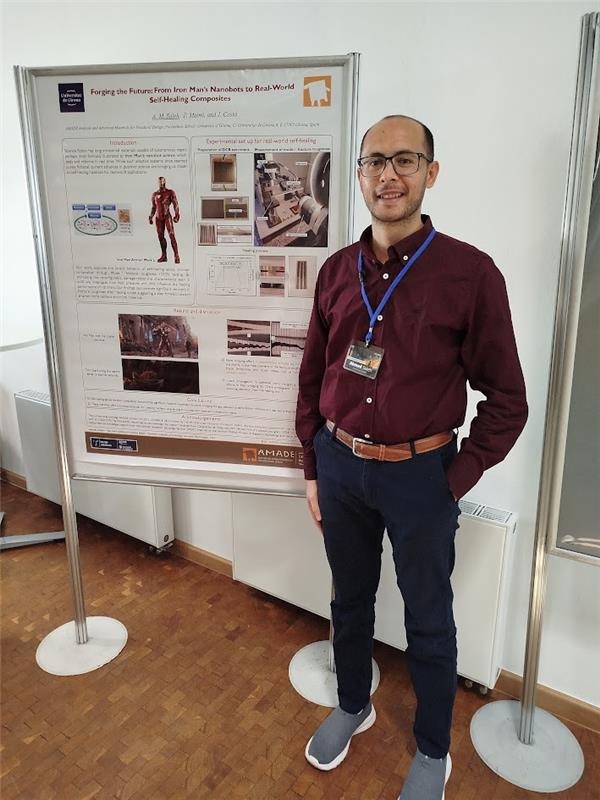
For me, the most enriching moment was presenting my poster and receiving feedback from people outside my field. It was surprising to see how much interest there was in the concept of self-healing composites, particularly when framed through the lens of science fiction.
Besides the academic side, how would you describe your personal and cultural experience during these days?
It was a very positive experience. Chemnitz, as the European Capital of Culture 2025, offered a vibrant cultural environment.
What do you think initiatives like this bring to PhD students and to the university in general?
Initiatives like this broaden the horizons of PhD students, exposing us to interdisciplinary thinking and international collaboration. For the university, such participation strengthensits visibility within the European research community and highlights its commitment to supporting young researchers.
Would you recommend other students to participate in future editions? Why?
Absolutely. It is a unique opportunity to connect your research to broader themes, gain inspiration from other fields, and expand your academic and personal network. I would strongly encourage other students to take part, as the benefits go far beyond the event itself. Personally, I am looking forward to similar events and summer schools.
